Your municipality has many faces. Let residents recognize the people behind it.

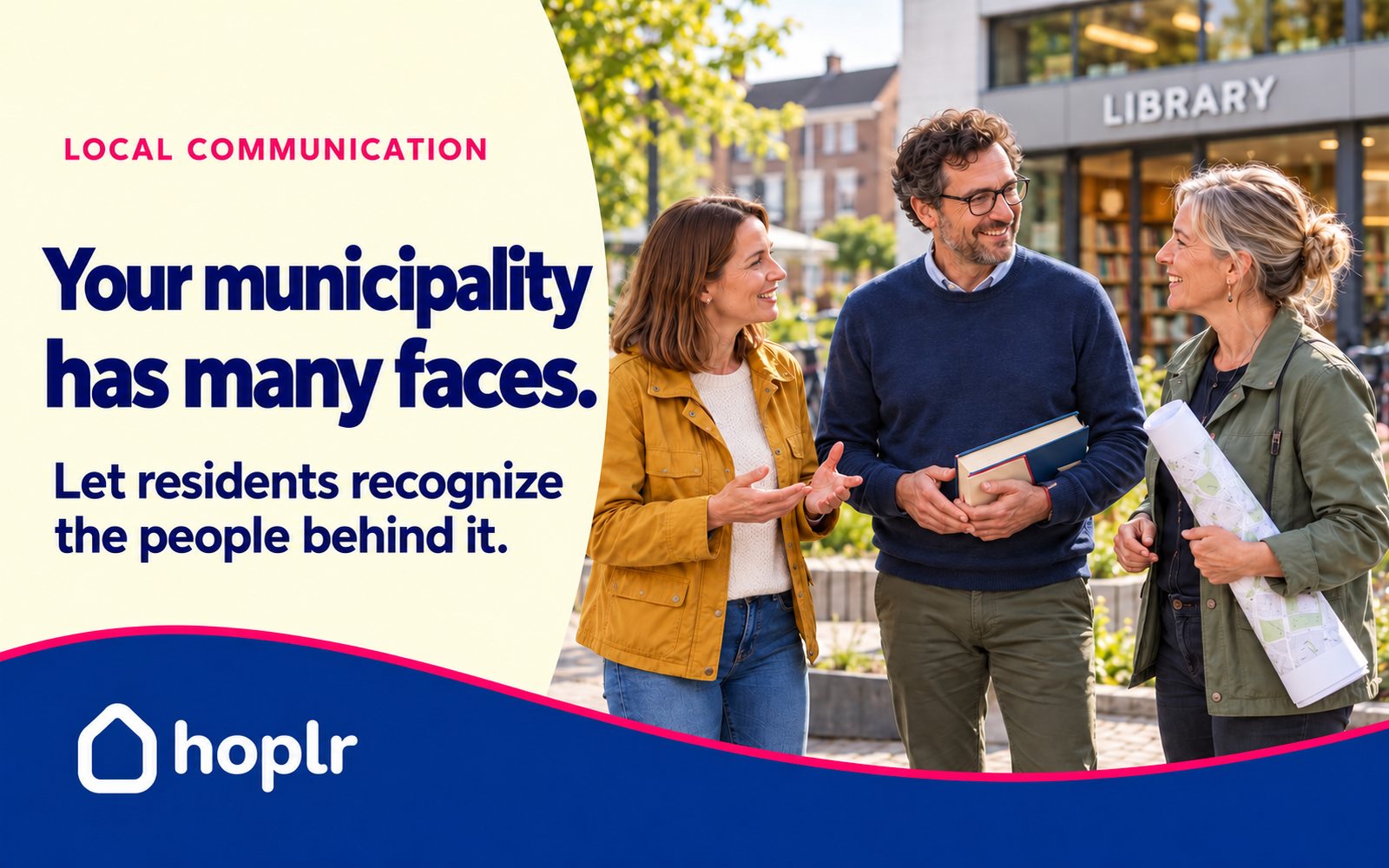
The neighborhood worker who stops to chat in the square. The library your children visit on Wednesday afternoons. The transport department explaining why your street is temporarily closed. Your municipality has many faces. Making them recognizable in your communication helps residents understand who is speaking, why a message matters to them, and where to turn with a question.
Yet much local information comes from the same general sender. An invitation from the neighborhood team sits alongside a waste collection update and a council meeting announcement. Each is useful, but the people and departments behind these messages sometimes remain in the background.
How do you give these different voices a recognizable place while keeping an overview as a communication team? Start with a few simple choices: who is speaking, who is the message for, and who will follow up?
Recognition also means knowing the people behind your municipality
In our article “A neighborhood’s value begins with recognition”, we explored how a familiar face can become part of everyday neighborhood life. A nod, a greeting, and a later conversation gradually make the surroundings feel more familiar.
The same idea offers a starting point for local communication. A resident might recognize the neighborhood team’s name from a local walk. A library invitation has context because someone visits regularly. Online communication can build on those experiences.
A recognizable sender communicates more than a name. It makes clear the role from which someone is speaking. A message from a neighborhood team invites a different kind of contact than an official council announcement. Making that distinction visible helps residents know what to expect.
Choose the right sender for each message
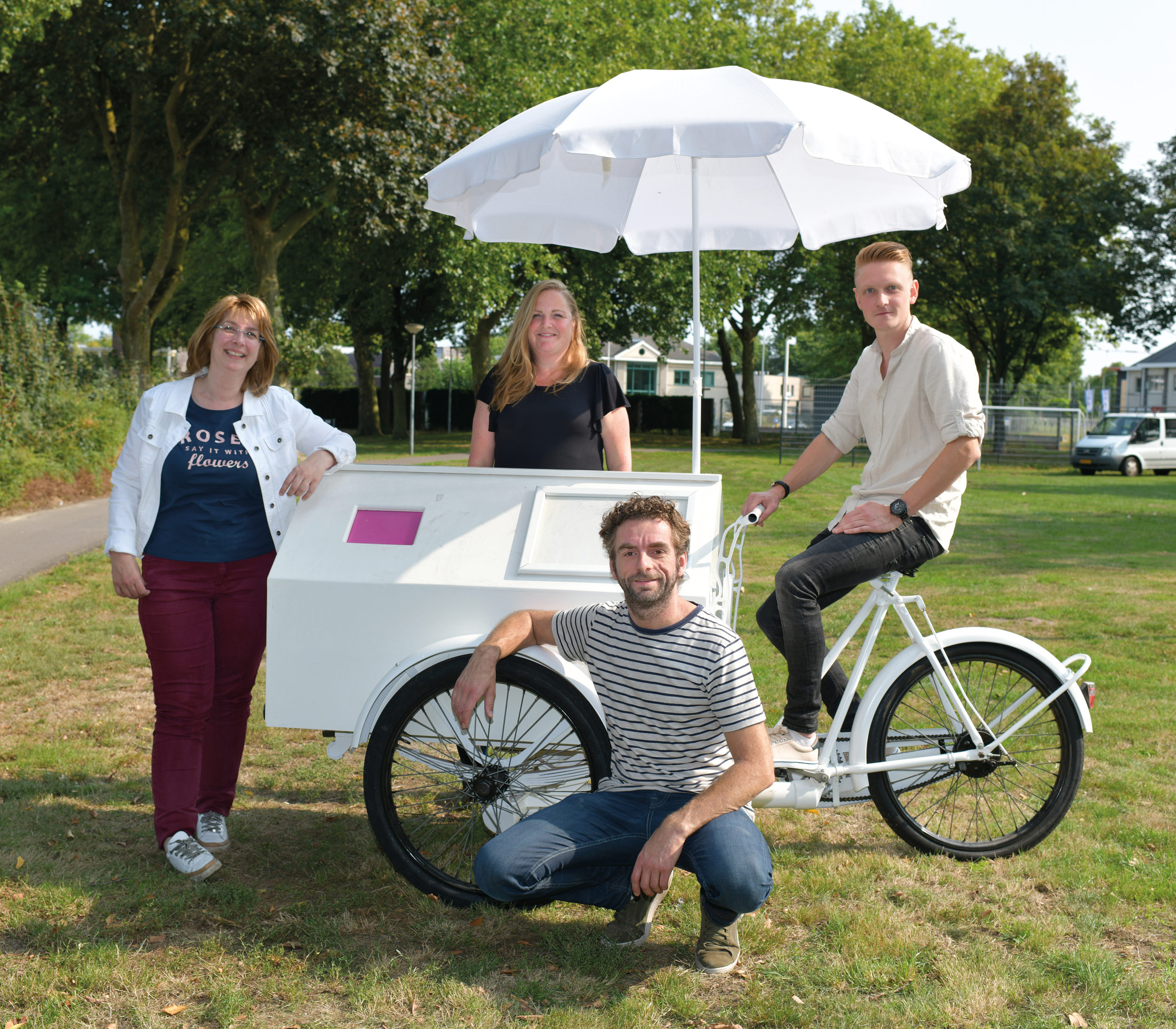
Not every department needs its own channel. Start with services and teams that regularly interact with residents and have relevant information to share. Choose a name that makes sense outside city hall and make the connection to your local authority clear.
- The municipality shares decisions, general services, and information relevant to a broad audience.
- A neighborhood team invites residents to meet, shares a local initiative, or explains when and where its staff will be available.
- The library or cultural services makes activities visible and explains who they are for.
- The transport department provides practical information about roadworks, access, and changes in the street.
A local partner can have a recognizable role too. Make clear which organization is speaking and what it is responsible for. This helps residents distinguish municipal information from a partner’s message.
Make the difference visible in your wording
Take this fictional invitation. A general version might read: “The municipality is organizing a get-together at the community center on Wednesday.” A neighborhood team can announce the same activity more personally and concretely:
“We’re the Park neighborhood team. On Wednesday, we’ll be at the community center from 2 to 4 pm. Come and meet us, ask a question, or tell us what you’d like to see in the neighborhood. There’s no need to sign up.”
The second version explains who will be there, what people can do, and how to join. A consistent team name and image can support recognition. The team also needs to remain reachable afterward through the contact point provided.
Then choose the neighborhood and audience
A recognizable sender works best with a relevant message. For residents near roadworks, the main question is: can I get to my home tomorrow? Parents want to know when the library is holding a story session. A neighborhood team wants to invite people living near its meeting place.
Ask three questions before publishing:
- Who needs this information? Is it for one neighborhood, several neighborhoods, a particular audience, or the whole municipality?
- What should the recipient know or be able to do? Put the practical implication or invitation near the start.
- How can someone respond? Explain where questions can go and what happens next.
This leaves residents with less to figure out for themselves. The message connects to a specific place, need, or activity.
Several voices need clear working agreements
Coordination becomes more important when more departments communicate. The communication team can maintain a shared approach: clear language, recognizable design, a realistic schedule, and arrangements for responding. Departments contribute their expertise and contact with residents.
Agree in advance who supplies content, who can publish, when consultation is needed, and who follows up on questions. Decide who covers absences too. A team name remains useful when a staff member changes roles, as long as contact details stay up to date.
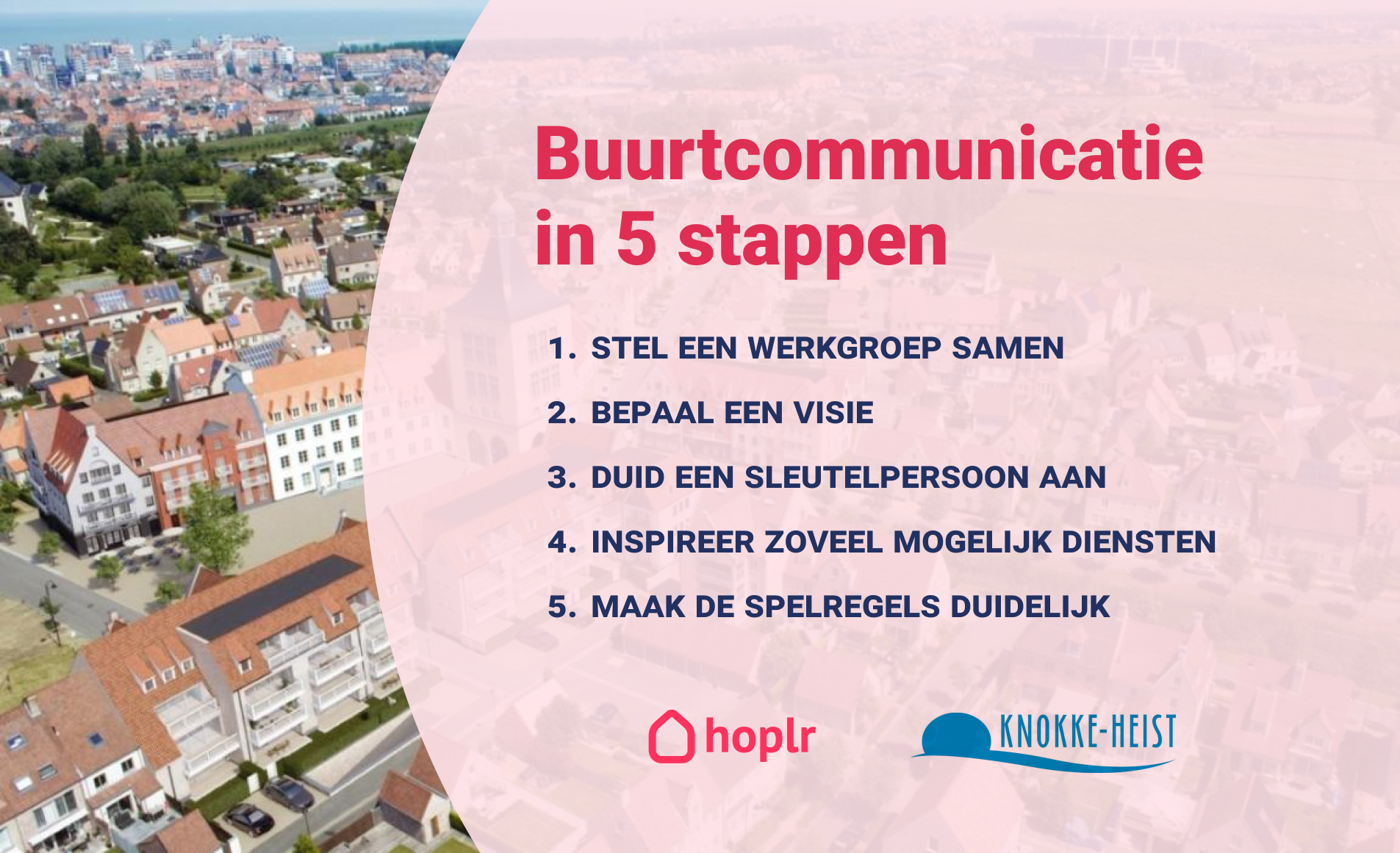
The previously published Knokke-Heist case study (in Dutch) shows one way to organize this collaboration. The municipality brought departments together in a working group, agreed on a shared vision, appointed a key contact, and set working rules. Those organizational lessons also apply when departments communicate under their own names.
Recognizable communication can use several channels
Residents differ in how they want to receive local information. One reads neighborhood updates on a smartphone; another follows a newsletter or relies on a printed letter. Decide how these channels should work together for each topic.
The Mechelen Communication Monitor from June 2025 (in Dutch) makes this concrete. In the study, 61% consider a digital newsletter with neighborhood or village news an important investment. At the same time, 67% prefer a residents’ letter for communication about their street or neighborhood. These are local findings; they underline the value of understanding your own residents’ preferences.
Use the same recognizable sender, consistent practical information, and a clear contact point across channels. Adapt the length and format to each one. A short update can link to a longer story, while a letter should communicate essential information on its own.
How Hoplr supports this approach
With Hoplr’s communication tools, municipalities can connect updates, activities, and surveys with the neighborhoods and audiences they are relevant to.
- City channels give departments or organizations their own sender name and visual identity, managed from one central dashboard.
- Neighborhoods and target groups help you decide who a publication is for. Your own email lists let you reach specific contacts beyond the neighborhood network too.
- Digital residents’ letters and newsletters provide space for longer stories and explanations alongside short neighborhood updates.
City channels, your own email lists, and digital residents’ letters are part of Hoplr Premium. The right combination depends on your municipality’s departments, audiences, and existing communication.
The neighborhood network adds everyday local context. Residents also come there to help each other, discover activities, and read updates from their surroundings. A neighborhood team’s or department’s messages become part of those exchanges.
Start with one team and a clear reason to communicate
Choose a team that regularly organizes something for residents or explains local developments. Agree on its sender identity, the neighborhoods involved, and a contact point. Then prepare a small series of messages around a concrete occasion: a meet-and-greet, a neighborhood activity, or the stages of roadworks.
Afterward, review both the available results and the questions received. Was it clear who posted the message? Did residents get timely answers? Did everyone internally know who was responsible? Use those experiences to refine the approach before more departments join.
Your municipality has many faces. Making them recognizable in your communication helps residents find their way to the people and services nearby.
Want to explore how this could work in your municipality? See in a demo how Hoplr brings neighborhood communication, city channels, and target groups together.
Frequently asked questions
What is a city channel on Hoplr?
A city channel is a subchannel for a department or organization within the municipality. It has its own sender name and visual identity. Your team manages communication from the central dashboard. City channels are included in Hoplr Premium.
Does every municipal department need its own channel?
No. Start with teams that regularly have relevant information for residents and can follow up on responses. General decisions and broad public services can continue to use the municipality’s main sender identity. Choose a structure that residents can understand.
How does the communication team keep an overview?
Agree who provides content, who publishes, which messages need coordination, and who answers responses. Use a shared schedule and consistent language and design guidelines. The central dashboard supports management; your organization decides on responsibilities.
Can you reach residents who do not use Hoplr?
Your own email lists let you reach specific contacts outside the neighborhood network. For each topic, also consider which other channels are needed, such as a printed letter, a neighborhood meeting, or information at a service desk. A digital approach does not automatically replace every other form of contact.
Share this article