A neighborhood’s value begins with recognition

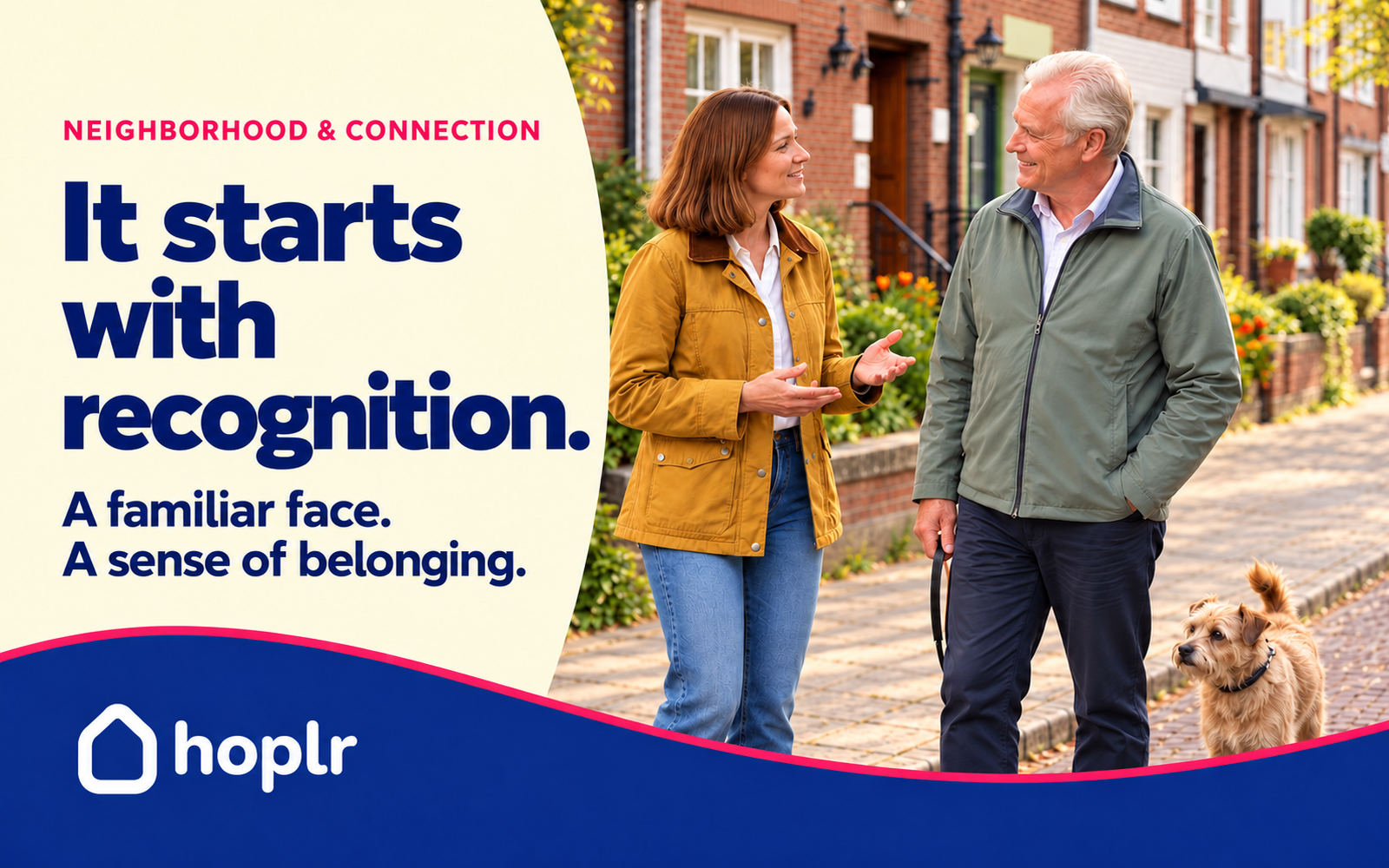
You see him around regularly. The man with the dog, a few streets away. At first, you simply pass each other. After a while, there is a nod. Later, a smile. Encounter by encounter, a neighborhood can start to feel more familiar. These small moments can strengthen your sense of belonging: the feeling that this is a place where you are at home.
You are on your way to work, heading to the store, or just stepping outside. He is walking in the opposite direction. You pass each other and carry on. It happens again the next day. And a few days after that.
Gradually, you recognize his face. You know the dog by now, too. You still know very little about him, but he has already become a small part of everyday life in your neighborhood.
A face becomes familiar
One morning, you give a small nod. He nods back. A tiny gesture, barely a second. Then you both get on with your day.
Something begins to grow between being strangers and knowing each other personally. The next encounter starts with a little recognition. You no longer have to wonder whether you have seen this person before. He is the neighbor with the dog.
These small moments form the story of our film. It follows a woman who repeatedly crosses paths with a man from her neighborhood. Their contact grows in an everyday way: from passing each other to nodding, from saying hello to having a conversation.
On Hoplr, you get to know a little about each other
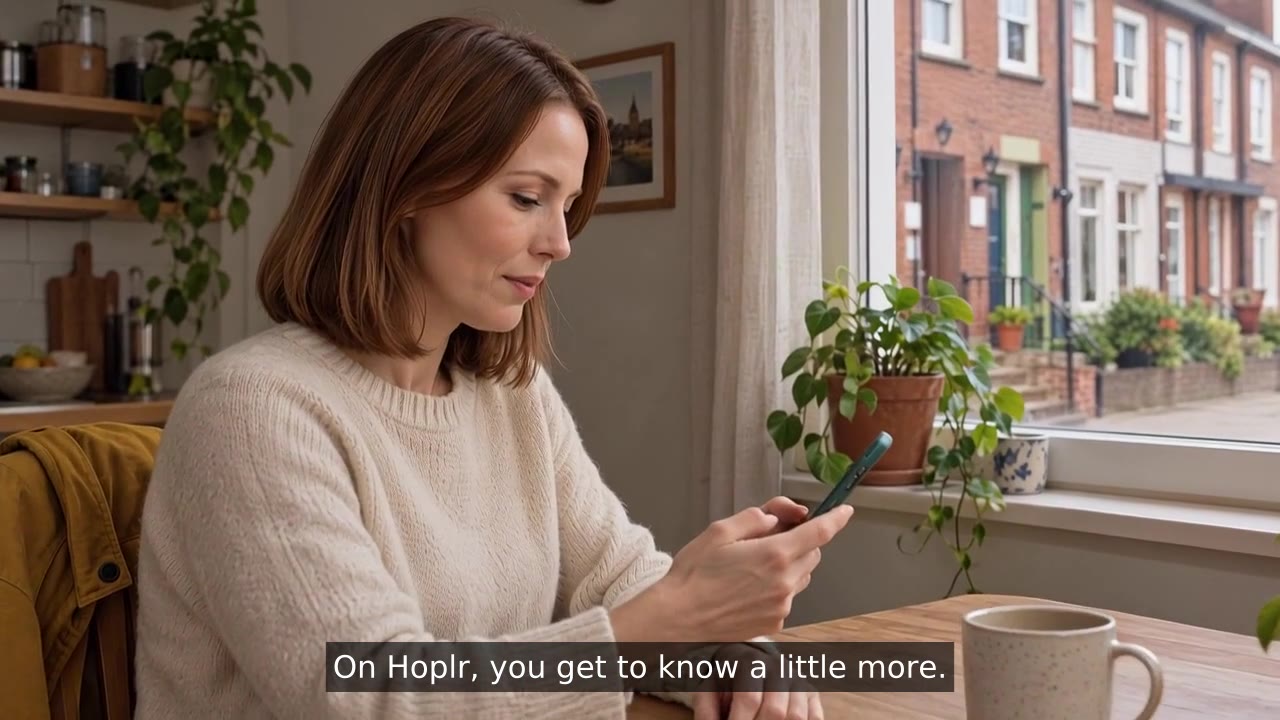
At home, you take a quick look at Hoplr. You read about what is happening nearby: someone needs a ladder, a neighbor shares an activity, and someone else offers to help. Among those posts, you spot a familiar face. The man you keep seeing around.
That face now has a little more context. Perhaps he has replied to a post about a neighborhood walk. Or you recognize his dog in a photo. What you learn about someone online can give you a starting point the next time you meet on the street.
The Hoplr neighborhood network gives these small exchanges a place. Residents share posts, ask questions, and discover activities close to home. Online contact and everyday neighborhood life can complement each other.
Then you realize: he recognizes you, too
The next time you approach each other, you look up. You briefly raise your hand. He smiles and says hello. You both keep walking, but you notice that the recognition goes both ways.
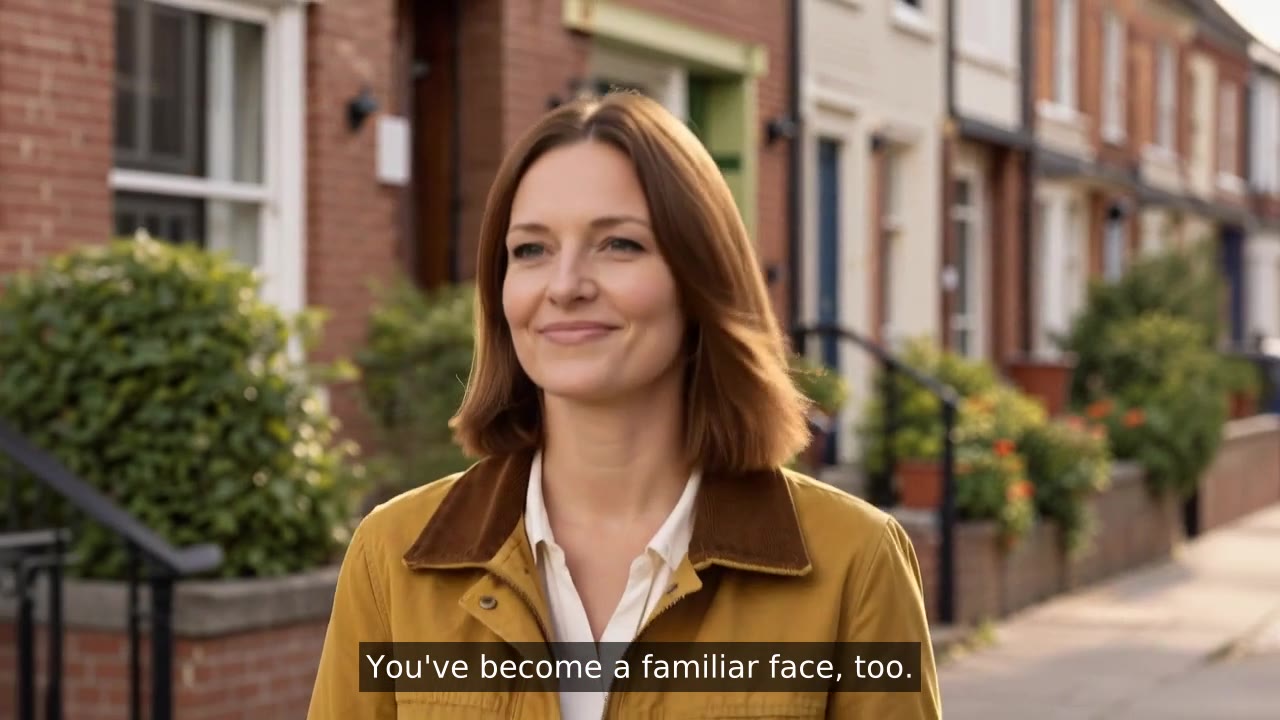
That gives the encounter a different meaning. You have apparently become a familiar face to him, too. There is someone on this street who recognizes you.
In the film, we see the woman walking on with a smile after that greeting. It is a small moment of acknowledgment. An everyday experience like this can contribute to feeling at home.
What is public familiarity?
Public familiarity is the sense of familiarity that develops when you recognize people in your everyday surroundings and they recognize you. This might happen on the street, at the school gate, in a park, or at a neighborhood store.
Sociologists Talja Blokland and Julia Nast studied this in two mixed neighborhoods in Berlin. Their research on public familiarity and belonging describes how these everyday forms of recognition relate to feeling that you belong somewhere. Even people with whom you have little personal connection can be part of that familiar environment.
You can feel that you have a place in the neighborhood while deciding for yourself how much contact you enjoy. Sometimes it stays at a nod. Sometimes it grows into more. Both have value.
Starting a conversation becomes easier
A few days later, you stop for a moment. You ask about the dog or mention that neighborhood walk. The conversation has a simple starting point: you have already seen and greeted each other several times.
Perhaps it lasts only a minute. Then you each carry on. But the next time you meet, you know a little more about each other. There is something new to talk about.
In our film, this conversation is the final step. It shows how small the beginnings of neighborhood contact can be. Recognition creates room to build a connection at your own pace.
What can local governments do?
For local governments, this is an invitation to pay attention to the ordinary, recurring moments of neighborhood life. Where do residents cross paths? Which places and activities make another encounter possible? And how can people discover what is happening close to home?
A few practical options:
- Make room for everyday encounters. Think of accessible walking routes, somewhere to sit in a public square, or a neighborhood space that people visit regularly.
- Make small initiatives visible. A walk, a coffee morning, or a cleanup gives residents a concrete reason to meet.
- Connect online and in-person contact. Help residents discover an initiative through the neighborhood network and make it easy for them to join when they arrive.
- Welcome different ways of taking part. Reading a post, saying hello, lending a hand, or organizing something: everyone can find a way to connect that suits them.
In Weert, Punt Welzijn helped get the Hoplr neighborhood network started. The case study shows how neighbors find one another for requests for help and then greet each other outside the app, too. It is a concrete connection between digital contact and neighborhood life.
At Hoplr, we express this idea as: participation starts with a connected neighborhood. Local governments that want to reach and involve residents can build on the relationships and places that already matter in their everyday lives.
It begins with recognition
You see him again. The same street, the same dog. This time, saying hello comes naturally. Perhaps you stop for a chat. Perhaps you are both in a hurry and simply exchange a smile.
You carry on through a neighborhood that feels a little more familiar.
A neighborhood’s value begins with recognition.
Would your local government like to create more opportunities for neighborhood contact? Discover how Hoplr helps residents find, help, and meet one another.
Recognition also matters in municipal communication. How can neighborhood teams, libraries, and other departments have a recognizable voice? Read the follow-up: Your municipality has many faces. Let residents recognize the people behind it.
Frequently asked questions
What does public familiarity mean?
Public familiarity means recognizing people in your everyday surroundings and being recognized by them. Think of a neighbor you regularly pass or someone you often see at the school gate. Familiarity can grow even without a close personal relationship.
How can recognition help people feel more at home?
A familiar face, a nod, or a greeting can give you a sense of being part of the neighborhood. Mutual recognition can be especially meaningful: you realize that others know you from everyday neighborhood life, too. These small moments can strengthen your sense of belonging.
How can Hoplr help neighborhood connections grow?
Hoplr lets you learn a little about people nearby through a request for help, an activity, or a neighborhood post. That can provide a starting point for a greeting or a conversation on the street. Online contact and encounters in the neighborhood can complement each other.
How can a local government encourage public familiarity?
A local government can make room for recurring encounters through accessible neighborhood spaces, walking routes, and small activities. Making initiatives visible through local communication and the neighborhood network helps residents find opportunities to join in. Allow for different kinds of contact, from a greeting to active participation.
The story and images accompany Hoplr’s illustrative film about public familiarity. The cover was created with AI using the film imagery as a reference.
Share this article