How to reach residents who never attend a public meeting

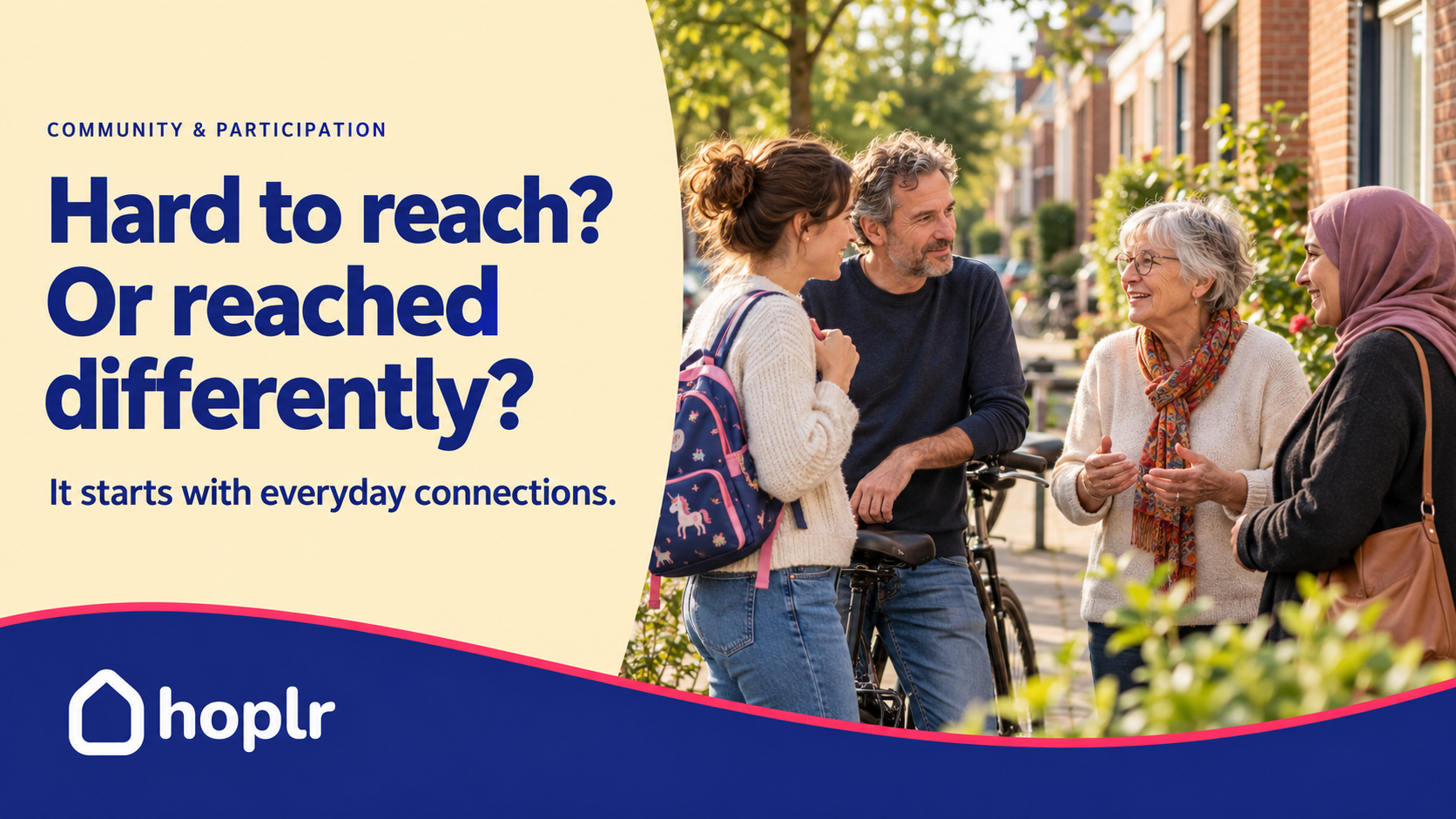
Reaching a wider range of residents starts with understanding where everyday conversations happen, who people trust and what makes taking part worthwhile.
The invitation is on the municipal website. The newsletter has gone out. The venue is booked. Yet when the discussion begins, many of the faces around the table are familiar.
Their contributions matter. But who is missing, and what would make it possible for them to take part?
Rethinking who we call hard to reach
We often describe certain residents as “hard to reach.” The phrase can make it sound as though the difficulty belongs to the people we want to involve. It deserves a closer look.
Someone who never reads the municipal newsletter may speak to a community worker every week. A parent who misses a public meeting may discuss the same issue while waiting outside school. A resident who leaves a survey unanswered may share an idea when a trusted neighbor asks what could improve their street.
Are these residents hard to reach, or do we need to reach them differently?
This question came up during the Active Citizenship event organized by Hoplr and INVIOR in Tilburg, the Netherlands. It invites local governments to examine their own approach: where do we look for contact, through whom, at what time, and around whose priorities?
Understand what makes participation difficult
Missing a meeting tells us little about how much someone cares about their neighborhood. Evening shifts, caring responsibilities, language, disability or limited internet access can make participation difficult. Previous experiences may also leave someone wondering whether speaking up will make any difference.
Changing the label does not remove those barriers. A different communication channel will not solve a lack of time, and a familiar face cannot promise that an institution will listen. Understanding the barrier helps identify what needs to change: the timing, the format, practical support or the way decisions are explained.
The Local Government Association’s Seldom Heard Voices Toolkit offers a useful parallel from adult social care in England. It highlights the role of community organizations and outreach workers in helping people access information, particularly where confidence in public services is fragile.
Build connections before asking for input
A consultation has a timetable. Everyday neighborhood life continues between those deadlines.
People borrow tools, organize activities, help with small tasks and discuss changes on their street. These connections have value in their own right. They can also create opportunities to introduce a local project, explain a decision or invite someone to contribute.
A community worker who knows local families may understand which invitation will make sense to them. A neighborhood association may know a good place to meet. A neighbor may help someone find the information they need before deciding whether to participate.
Local governments can support these relationships throughout the year by staying present, responding to everyday questions and working with local organizations. When a new project starts, there are already people and places through which a conversation can begin.

Five ways to broaden participation
1. Make the issue relevant to everyday life
“Help shape our mobility strategy” requires residents to interpret a policy agenda. “Where is it difficult to cross the road on the way to school?” gives them a concrete starting point.
Explain how the wider decision connects to daily experience, what residents can influence and which constraints are already fixed. Use clear language without hiding the choices or trade-offs involved.
2. Work with people residents already know
Ask community workers, schools, libraries, sports clubs and neighborhood groups how they would approach the people you are missing. Involve them in designing the invitation and choosing a suitable setting.
Work with several networks and keep direct ways to contribute open. An organization can help make contact without representing everyone in its community. Agree on the time and support partners need for this work.
3. Offer a manageable first step
Some residents can contribute a useful observation but cannot commit to a two-hour meeting. Offer a focused question, a short conversation or an opportunity to mark a location on a map.
Give people enough context to answer meaningfully, and make further information available. A brief contribution can inform a wider process; complex decisions may still require longer discussion.
4. Connect digital and in-person opportunities
A parent might respond on a phone after the children are asleep. Another resident may prefer a paper form at the library or a conversation at an existing community activity. Provide suitable options and explain how each contribution will be considered.
The OECD’s participation guidelines recommend combining digital tools with in-person methods where possible, while planning for the resources and accessibility that participation requires.
5. Check who is missing while there is still time
Review participation during recruitment. Are responses concentrated in a few neighborhoods? Are residents most affected by the proposal finding a way to contribute?
Use that information to adjust outreach, add a suitable time or venue, or work with another local partner. Collect only information needed to understand participation gaps. A larger response count alone does not establish that the wider population is represented.
Connect neighborhood contact with public decisions
This is the approach behind Hoplr: connecting everyday neighborhood interaction with local communication and opportunities to participate.
Terneuzen, in the Netherlands, illustrates how those elements can work together. The municipality combines the Hoplr neighborhood network with a public participation platform. Its 2025 consultation on long-term plans for the local area received 640 survey responses, alongside input gathered through street interviews and school visits.
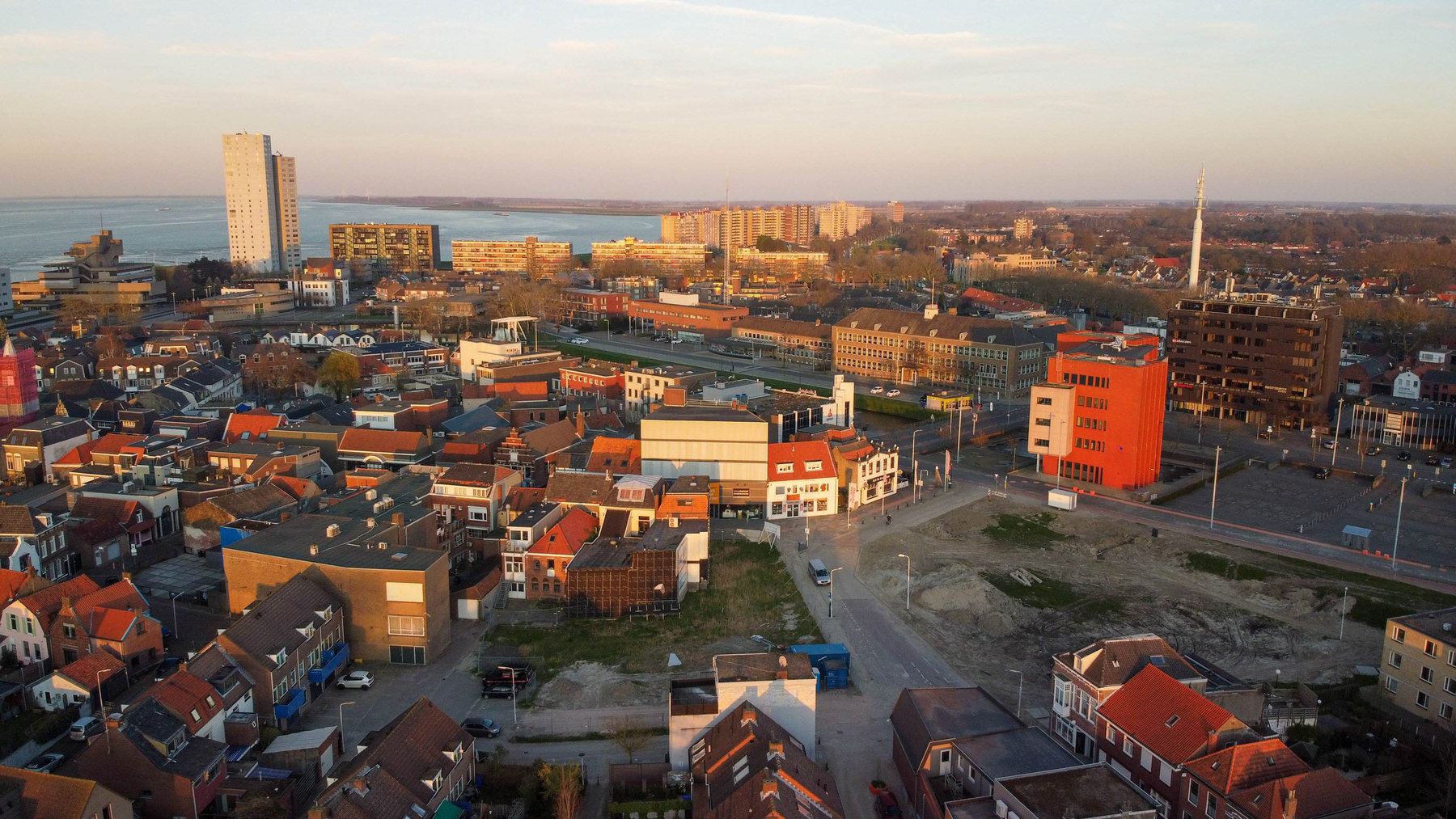
In the village of Zuiddorpe, residents were asked what they wanted from a place for play, exercise and meeting others. Their input helped shape two designs, which residents could then choose between. The process connected the initial invitation to a visible next step.
Show residents what happens after they contribute
Before inviting people to participate, decide how you will report back. Explain what you heard, what changed, what could not be taken forward and why. If a decision is delayed, share the next expected update.
Make this feedback available through the same places and contacts used to invite people. Someone who contributed at a community center should be able to find the outcome there too. The OECD identifies explaining how input was used as a core step in a participation process.
Start with one neighborhood
For your next project, identify one neighborhood or group whose perspectives are missing. Speak with residents and local partners about what makes participation difficult. Adapt one part of the approach, and plan the follow-up before sending the invitation.
Treat “hard to reach” as a question to investigate. Learning how people prefer to connect gives local governments more ways to invite them into decisions that affect their lives.
Participation begins with a connected neighborhood. Supporting everyday contact, making room for different ways to contribute and following through on what residents share gives that principle practical meaning.
Frequently asked questions
Why do some residents never attend a public meeting?
Their absence says little about how much they care about their neighborhood. Working hours, caring responsibilities, language, accessibility or previous experiences can make participation difficult. Ask residents and local partners about these barriers so you can adapt the timing, format or support available.
How can local governments reach residents beyond their usual channels?
Connect through places and relationships that are already part of residents’ daily lives, such as schools, libraries, neighborhood groups and community workers. Make the invitation relevant and offer a manageable first step, such as a short conversation or a focused question. Work with several networks to reach more perspectives.
Is digital participation enough to involve everyone?
A digital channel alone does not remove every barrier. Combine online options with street conversations, paper forms or existing neighborhood activities. Provide enough information through each channel and explain how contributions will be considered. More responses do not, by themselves, mean that all perspectives are represented.
How can local governments show residents what happens to their input?
Plan how to report back before inviting people to contribute. Explain what you heard, what changed and which suggestions could not be taken forward, with reasons. Share the outcome through the same places and contacts used for the invitation. If a decision is delayed, say when residents can expect another update.
Share this article